Custom CRM software with us starts at €9,000 + VAT. The final price depends on three things: how many screens you need, which programs it needs to connect with, and how much data needs to be transferred from what you use today. We give you a fixed price before we start, and maintenance is separate, with no per-user fee.
That figure is the starting point, and on its own it doesn't say much. Below, you'll see what's behind it, which parts make a CRM more expensive, which don't, and how to compare the cost with a subscription CRM like Salesforce or HubSpot, which charge a license fee per user every month.
What you pay when you pay for a custom CRM
A custom CRM is a program for managing customers, opportunities, and quotes, built around your sales process and your names for everything. The money goes into the work required to make that happen, and almost never into writing code blindly.
This is what gets done, in order, on a project:
- Understand how you sell today. Who receives the lead, what they send, when they call back, and where information gets lost between one person and another.
- Design the screens. The customer record, the sales funnel, the quote, and the dashboard with your numbers, so the team can review them before anything is programmed.
- Build it in stages. Start with what you use most, test it as the project moves forward, and make corrections along the way.
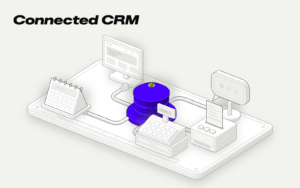
- Connect it to what you already use: your website, forms, WhatsApp, email, or invoicing.
- Import your data. Customers from Excel or your previous CRM are brought in cleanly, without duplicates.
- Train the team to use it.
With us, data migration and training are included in the price. It's worth asking any provider about this, because this is where extra costs are most often hidden.
What increases the price of a CRM
Two CRMs can look the same in a demo and cost very different amounts. What really drives the quote:
- The number of screens and user types. A CRM for a sales team takes less work than one that also includes admin, technicians, and management, each with their own permissions.
- Integrations. Connecting to software with a well-documented API is quick. Connecting to older software without an API means finding another approach, and that takes more hours.
- Quotes with rules. Different rates by customer, volume discounts, or line items that depend on others increase the workload.
- The state of your data. Ten years of customer data in three different Excel files, with duplicate names, costs more to import than a clean list.
- Reports. A dashboard with sales and open quotes is simple. Forecasts by sales rep and month take more work.
- Mobile. If sales reps use it in the field, the screens are designed for phones too.
On the pricing page, you'll find what increases the price of each service and the starting prices for everything we do.
What doesn't change the price
The number of people who use the CRM. A custom CRM doesn't charge a per-user fee. If five more sales reps join tomorrow, you don't pay for five additional licenses. The data is yours, and you can export it whenever you want.
What you do need to include is maintenance: backups, updates, fixes, and small changes. It's separate from development, and we spell it out in the quote so you can calculate the full cost.
How to compare it with a subscription CRM
A subscription CRM has no development cost, but it charges every month for each person who uses it. The current figures, taken from their official websites on 19 October 2026:
| CRM | How it charges | List price |
|---|---|---|
| Salesforce (Sales) | Per user and month, depending on the edition | From €25 to €550 per user per month |
| HubSpot Sales Hub Pro | Per license and month | 100 USD per license per month |
| HubSpot Sales Hub Enterprise | Per license and month | 150 USD per license per month |
Do the math with your team. With ten sales reps on a €100 edition per user per month, the license costs €12,000 per year, and costs the same again the following year. On top of that, you pay for setup and any customization needed to fit the way you sell.
Custom CRM software works the other way: you pay for development once, from €9,000 + VAT, and then for maintenance. With a small team and a standard sales process, the subscription is usually cheaper and you can get started sooner. The more the team grows, or the more you have to force off-the-shelf CRM software to fit, the more the numbers favor your own solution.
We compare them in detail in Custom CRM vs. Salesforce and HubSpot, including the cases where we recommend the subscription option.
How to request a quote you can compare
If you ask several providers for pricing without giving them the same information, you’ll get figures that can’t be compared side by side. Before requesting a quote, prepare this:
- Your sales process on one page: where contacts come from, what steps they follow, and who handles each one.
- The list of programs the CRM needs to communicate with, and what data passes from one to another.
- Where your customers are today and how many there are, even if it’s just a rough estimate.
- Who will use it and from where: the office, mobile, or both.
- The three numbers you want to see every Monday.
And ask every provider the same questions. Is the price fixed or hourly? Are migration and training included? How much does maintenance cost per month? What is the timeline, and is it in writing? How do I get my data out if I leave one day?
Mistakes that make a CRM more expensive
Almost all cost overruns come from decisions made in the first week.
- Starting to code without understanding how you sell. You build a CRM for a process that doesn’t exist, and then you have to rebuild it.
- Trying to have everything on day one. A CRM is built in stages: first what you use every day, then the rest.
- Leaving salespeople out until the end. If they see it for the first time on launch day, they won’t use it.
- Forgetting about the data. Moving messy customer data into a new CRM only moves the mess somewhere else.
- Doing the math without maintenance. A CRM without maintenance stops working properly as soon as something it’s connected to changes.
Connections are where quotes most often go off track. We explain how they work in CRM integrations.
If you want the price for your project, the custom CRM page explains what's included and how we work. We respond Monday through Friday, from 9:00 to 19:00, in less than 2 hours.
Quotes are created in Word, sent by email, and no one knows which ones are still active.
Every contact from the website enters the CRM with its source and the project they’re requesting. The quote is generated from the CRM with the project’s line items and each one’s status. The CRM sends an alert when a quote has gone a week without a response.
from€9,000
Sources
- Salesforce charges per user per month (checked on 19-oct-2026)
- Salesforce, 25 edition at € per user per month (19-Oct-2026)
- Salesforce, 100 edition at € per user per month (19-Oct-2026)
- Salesforce, 550 edition at € per user per month (19-Oct-2026)
- HubSpot Sales Hub Pro, 100 USD per license per month (official pricing catalog, 19-Oct-2026)
- HubSpot Sales Hub Enterprise, 150 USD per license per month (19-Oct-2026)