Mandatory e-invoicing between businesses already has a date in the BOE. It will be required on October 6, 2027 for those who invoiced more than 8 million euros the previous year and on October 6, 2028 for the rest of businesses and freelancers. It is an obligation separate from Verifactu, because Verifactu controls the software you use to create the invoice and this changes the format and the channel through which you send it to another business.
Both rules come from the Tax Agency and both deal with invoices, so it's normal to mix them up. Below you'll find how they differ, the calendar for each one, what changes when you invoice another business, and what your management software has to do.
Two obligations that are often confused
The Verifactu regulation itself says so in its introduction. There are “significant differences” between the two rules, because e-invoicing deals with how the invoice is made, stored, and sent, while Verifactu deals with the requirements of the software that creates it.
| Verifactu | E-invoicing between businesses | |
|---|---|---|
| Where it comes from | Royal Decree 1007/2023 | Crea y Crece Law and Royal Decree 238/2026 |
| What it regulates | The software you invoice with | The invoice format and how it arrives |
| Who it affects | Those who invoice with software | Those who invoice other businesses or freelancers |
| Receipts for individuals | Yes, they are included | They are not included |
| General date | July 2027 (January for companies) | October 2028 (2027 if you invoice more than 8 million) |
The Crea y Crece Law is Law 18/2022, on business creation and growth. Article 12 is the one that requires e-invoicing between businesses, and the reason given by the Government is to know actual payment terms to reduce late payment.
The Verifactu dates in the table are the ones the BOE sets today. For companies, before January 1, 2027, and for freelancers, before July 1, 2027. On October 5, 2026, the Spanish Tax Agency announced that it wants to delay them to October 2028 so they coincide with e-invoicing for businesses with revenue under €8 million, but as of November 3, 2026, that change has not been published.
The e-invoicing calendar
The regulation is Royal Decree 238/2026, published in the BOE on March 31, 2026. It left the dates subject to an order from the Spanish Tax Agency regulating the public invoicing platform, and that order, Order HAC/1028/2026, came into force on October 6, 2026. The deadlines run from that day.
| Who | Issue and receive electronically | Report payments |
|---|---|---|
| More than €8 million per year | October 6, 2027 | October 6, 2027 |
| Other companies | October 6, 2028 | October 6, 2028 |
| Freelancers | October 6, 2028 | October 6, 2029 |
The €8 million threshold is measured by what you invoiced in the previous calendar year. Large companies will also have a transition year in which they will send each e-invoice with a PDF alongside it, so anyone who has not adapted yet can read it.
The Tax Agency must launch its platform at least two months before the first date, so companies and suppliers can run tests.
What changes when you invoice another business
Today a PDF sent by email counts as an e-invoice. Under the new rule, an invoice to another business will have to be a message with data structured according to a European standard, in one of these four formats: UBL, CII, EDIFACT or Facturae. A PDF made in Word is none of them.
An invoice can travel two ways. One is a private invoicing platform, of the kind many providers already offer. The other is the Tax Agency's public solution, which is free. If you don't agree otherwise with your supplier, it is understood that you receive their invoices through the public channel, without having to request it.
There are more changes worth knowing about.
- The Tax Agency receives a copy of all of them. Private platforms must send the public solution a copy of each invoice at the same moment it is issued.
- Invoices sent through a private platform are signed with an advanced electronic signature.
- The recipient of the invoice must respond. They must report whether they accept or reject it, and the date they pay it, no later than 4 calendar days after payment, not counting Saturdays, Sundays, or national holidays.
- Receipts are left out. Simplified invoices do not have to be electronic, except qualified ones, which are receipts where you include the details of the business asking for them.
The obligation is only between businesses and freelancers. You can still give an individual the invoice as before, even if your software still has to comply with Verifactu.
What your management software has to do
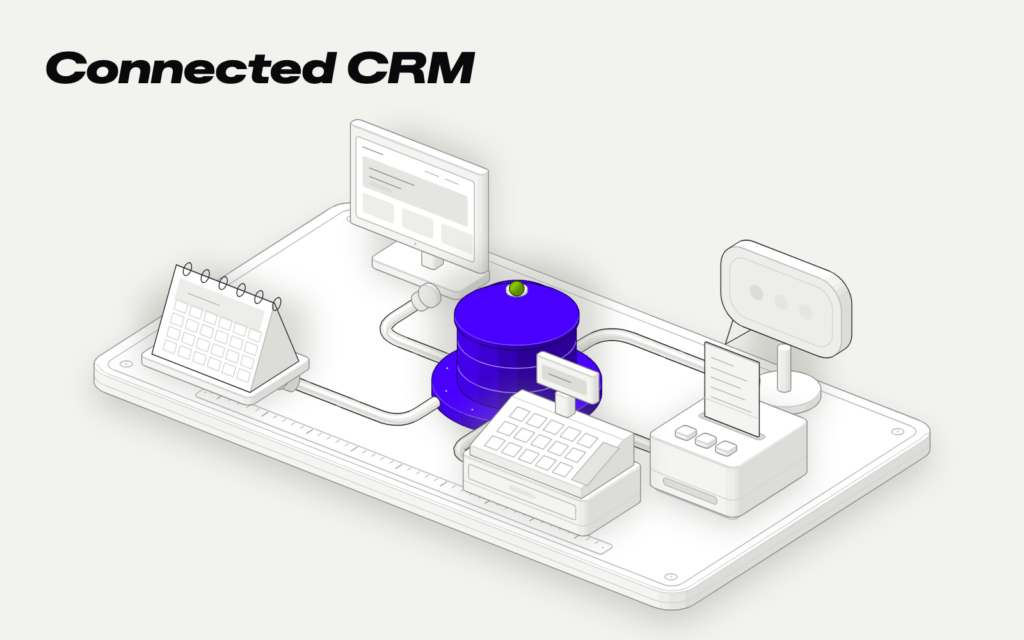
With both rules at once, your invoicing software has more work to do. It has to comply with Verifactu for each invoice, issue it in one of the accepted formats and send it through a platform or the public solution. And on the purchasing side it has to receive your suppliers' invoices in that format and report when you pay them.
The advantage is that an invoice with structured data can be read without typing. If your software receives it correctly, the supplier's invoice comes in on its own, is reconciled with the order or delivery note, and the payment is reported when you mark it as paid. If not, someone on your team will end up uploading invoices and payments by hand on the Tax Agency's website.
Before renewing or changing software, ask your provider these questions and get the answer in writing.
- In what format does it issue invoices to businesses? It has to be one of the four accepted formats.
- How does it send them? Through a private platform, which one and how much it costs, or through the public solution.
- Does it receive supplier invoices in those formats and enter them in the accounting system?
- Does it report payments to the public solution, or will I have to do it myself?
- Does it comply with Verifactu? Have it show you the manufacturer's declaration.
If you use subscription software, ask whether these changes are included in your fee. If your invoicing comes from custom-built software, or from several that don't talk to each other, each one has to adapt. In Custom ERP or SaaS you can see when each option is worth it.
If you're a freelancer and don't invoice much
Your date is October 6, 2028 to issue and receive, and October 6, 2029 to report payments. Until then, reporting payments is voluntary.
If you only sell to individuals with receipts, this rule doesn't change anything for you. If you invoice businesses, it does, and the public solution is the option designed for you, because the regulation presents it as a basic and affordable alternative, and using it is free.
What won't work for you is the Word template. If you use it to invoice businesses, you have two years to change it.
If you want your orders, invoices, and payments to live in one system ready for both regulations, in custom ERP you can see how we do it, and in pricing, everything else. We reply Monday to Friday, from 9:00 to 19:00, in under 2 hours.
You invoice construction companies and installers, receive their suppliers' invoices as PDFs by email and someone types them in one by one.
Invoices are generated from the order in an accepted format and reach each client through the channel they have chosen. Supplier invoices come in on their own and are reconciled with the delivery note before you pay them. When you mark a payment, the software notifies the public solution, and each invoice also complies with Verifactu.
from€20,000
Sources
- Order HAC/1028/2026 came into force on October 6, 2026 (accessed 3 Nov 2026)
- October 6, 2027 for those invoicing more than €8 million (3-Nov-2026)
- More than €8 million in the previous calendar year (3-Nov-2026)
- First year for large companies with a PDF alongside; 12 months (3-Nov-2026)
- October 6, 2028 for everyone else, freelancers included (3-Nov-2026)
- Reporting payments, October 6, 2028 for companies (3-Nov-2026)
- Reporting payments, October 6, 2029 for freelancers (3-Nov-2026)
- Until that date, reporting payments is voluntary for freelancers (3-Nov-2026)
- Royal Decree 238/2026, published in the BOE on March 31, 2026 (3-Nov-2026)
- Deadlines counted from the entry into force of the public solution order (3-Nov-2026)
- Order HAC/1028/2026, which regulates the public solution (3-Nov-2026)
- The public solution, at least two months before the first date (3-Nov-2026)
- The Crea y Crece Law is Law 18/2022, on business creation and growth (3-Nov-2026)
- Its article 12 introduces mandatory e-invoicing between businesses (3-Nov-2026)
- The goal is to reduce late payment and know the real payment terms (3-Nov-2026)
- The Verifactu regulation, Royal Decree 1007/2023, acknowledges the differences with e-invoicing (3-Nov-2026)
- Verifactu applies to anyone who uses invoicing software (3-Nov-2026)
- Verifactu includes simplified invoices (receipts) (3-Nov-2026)
- Verifactu, companies before January 1, 2027 (3-Nov-2026)
- Verifactu, freelancers and everyone else before July 1, 2027 (3-Nov-2026)
- The Spanish Tax Agency announced on October 5, 2026 the delay to October 2028 to coincide with e-invoicing for those invoicing up to €8 million (3-Nov-2026)
- The Tax Agency presents it as a forecast (page updated on 3-Nov-2026)
- Mandatory when the recipient is a business or a freelancer (art. 3; 3-Nov-2026)
- Structured message under European standard EN16931 (3-Nov-2026)
- Four formats: CII, UBL, EDIFACT and Facturae (3-Nov-2026)
- Through a private platform, through the public solution, or both (3-Nov-2026)
- Unless you agree otherwise, you receive it through the public solution without asking for it (3-Nov-2026)
- The public solution is free (3-Nov-2026)
- The Tax Agency manages it (3-Nov-2026)
- A basic, affordable alternative for anyone who wants it (3-Nov-2026)
- Private platforms send a copy of each invoice to the public solution when it is issued (3-Nov-2026)
- Invoices through a private platform, with advanced electronic signature (3-Nov-2026)
- The recipient reports acceptance or rejection and payment (3-Nov-2026)
- Payment is reported no later than 4 calendar days afterwards, excluding Saturdays, Sundays and national holidays (3-Nov-2026)
- Receipts (simplified invoices) are excluded, except qualified ones (3-Nov-2026)
- The exception does not apply to qualified simplified invoices (3-Nov-2026)
- The electronic invoice for large companies in the first year comes with a PDF so it can be read (3-Nov-2026)
- Today, an electronic invoice is one issued, transmitted and received in electronic format (Royal Decree 1619/2012, art. 9; 3-Nov-2026)
- Qualified receipt, with the recipient company's details if it requires them (Royal Decree 1619/2012, art. 7.2; 3-Nov-2026)
- There are already many private invoice platforms in Spain (3-Nov-2026)
- To have reliable information on actual payment terms (3-Nov-2026)